
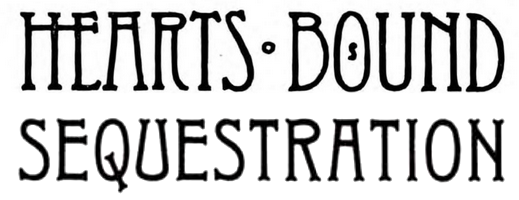

 Jagged (1888)
When did high-waisted (and low-waisted) fonts/lettering first appear?

Craig Eliason
Posts: 1,528
in Type History
There's a period charm to typefaces with intentionally high middles of letters like /B/E/F/H/K/S. Sometimes A/P/R join in, or sometimes they instead have intentionally low middles. /M and /W and maybe /N might get in the act too.
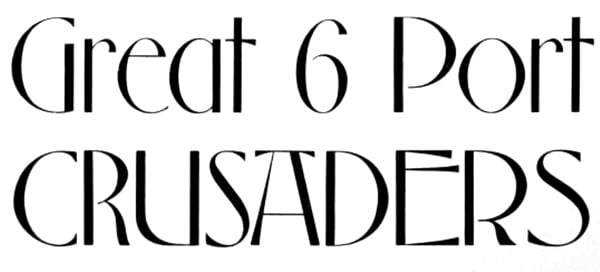
I associate this quirk with Jugendstil (central European Art Nouveau) around the turn of the twentieth century, as in these examples:
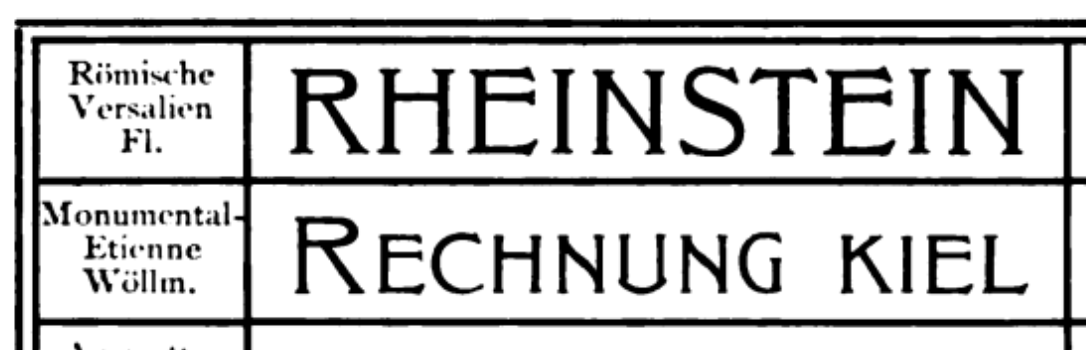
But it can be seen in Charles Rennie Macintosh's Arts & Crafts work,and American Arts & Crafts folks like Dard Hunter, and later in proportional games played by Art Deco designers. I also guess that this style was adopted into type from sign-painting and hand-lettering practices.
Any ventures as to when and where it first came about (in type and/or lettering)? (And when you think it peaked?)
6
Comments
-
-
Love the question too! I haven’t found a typeface example before Florian’s 1881, but there were plenty that arrived later that decade. Other prominent early ones below. All but one of these (Typo) are credited to John F. Cumming at Dickinson. Thanks to this exercise, I think we can now say he was one of the originating, and certainly most prolific, designers of the genre.Jagged (1888)
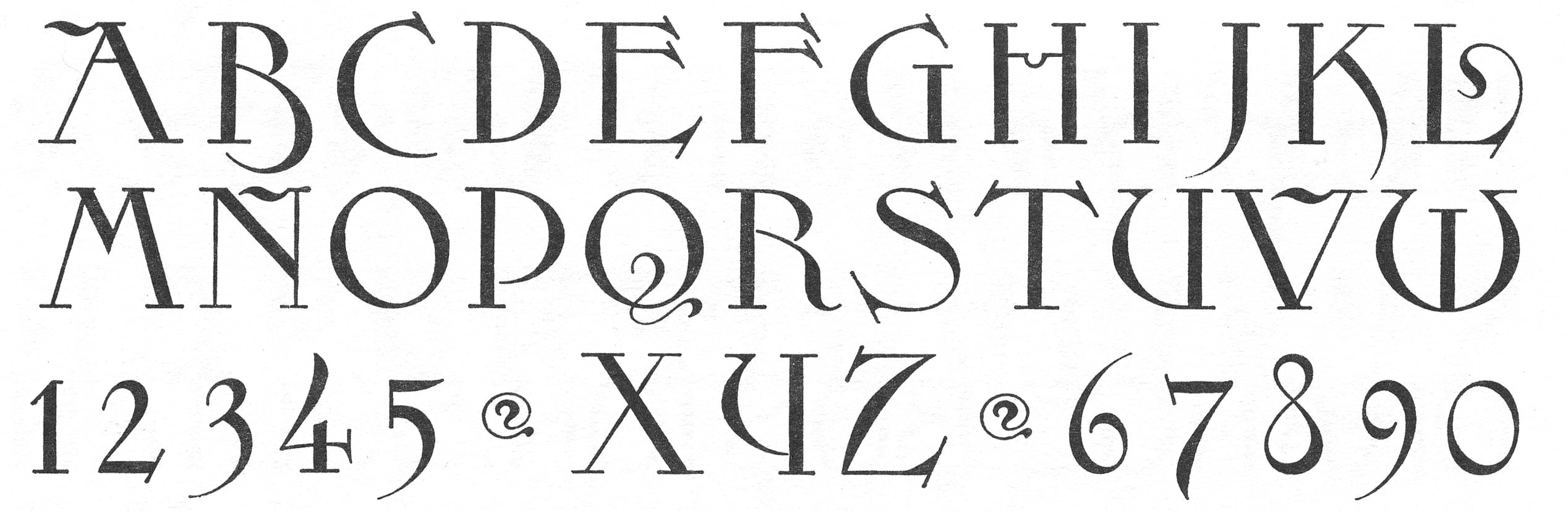 Typothetæ/Skjald (1889)
 Elandkay (c.1892)I would guess the peak was around the turn of the century – as you say: Arts & Crafts/Jugendstil/Nouveau – and then it faded out in the late Deco period, circa 1935.7
 -
Do you think there was an influence by Runes?
0 -
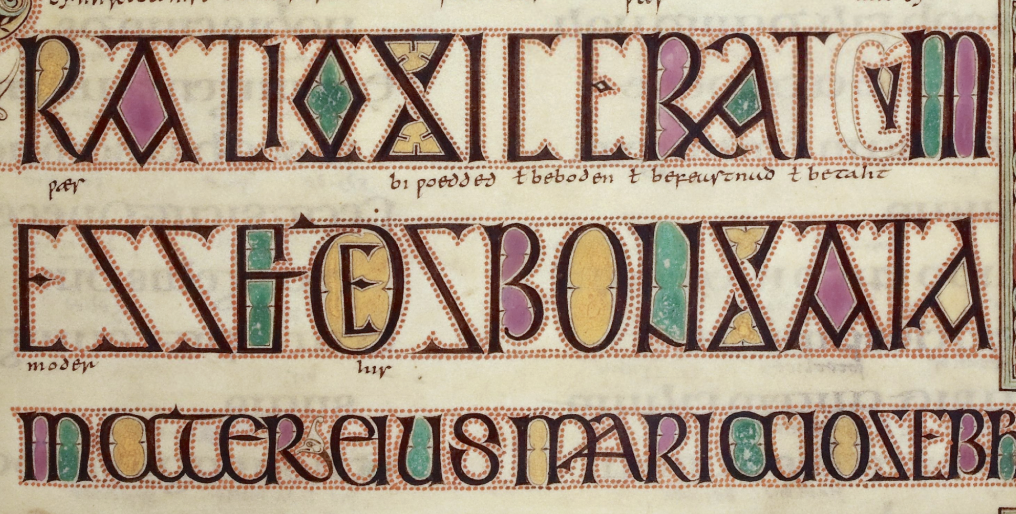
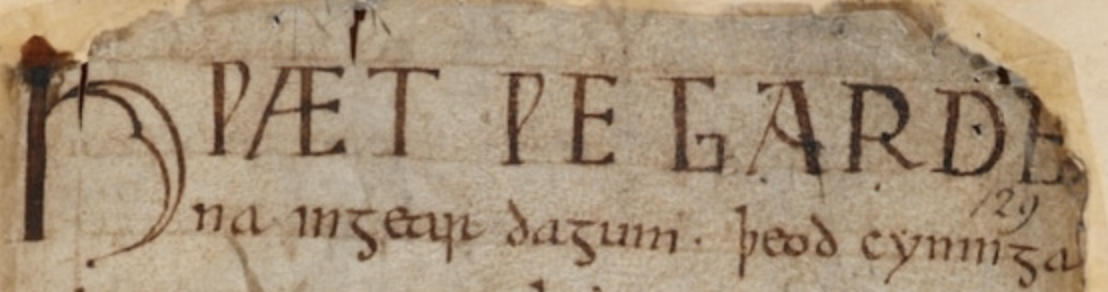
Indirectly, I think, Chris. One river of inspiration feeding this style flows from the Middle Ages, from manuscript titling letterforms that are inluenced by runic scripts.
7 -
John, I fail to spot any mutual aspect of the above book lettering samples with runes;* nor can I see any high-waist details like in the type samples from the end of the 19th century.(* with the exception, perhaps, of the peculiar Þorn which looks like Ƿynn)0
-
I wasn’t specifically referring to the high-waistedness feature, but to this kind of mediaeval letter as one of the sources of inspiration for some features of this lettering: the shapes of bowls and in the tendency to tall, narrow forms. I am also looking at this mostly in the UK context, where the Arts & Crafts and pre-Raphaelite movements are explicitly engaged with mediaeval sources.
Re. the indirect connection with runes, I think familiarity with runes influenced the tall narrow forms of majuscules in the Anglo-Saxon manuscripts. Both scripts are used side-by-side in some Anglo-Saxon manuscripts, so some cross-filtering of aesthetics is unsurprising. See Victoria Symons Runes and Roman Letters in Anglo-Saxon Manuscripts.1 -
"I think familiarity with runes influenced the tall narrow forms of majuscules" I agree with John on this.0








Categories
- All Categories
- 47 Introductions
- 4K Typeface Design
- 499 Type Design Critiques
- 591 Type Design Software
- 1.1K Type Design Technique & Theory
- 674 Type Business
- 907 Font Technology
- 29 Punchcutting
- 544 Typography
- 129 Type Education
- 333 Type History
- 82 Type Resources
- 114 Lettering and Calligraphy
- 33 Lettering Critiques
- 81 Lettering Technique & Theory
- 580 Announcements
- 101 Events
- 116 Job Postings
- 176 Type Releases
- 186 Miscellaneous News
- 270 About TypeDrawers
- 54 TypeDrawers Announcements
- 114 Suggestions and Bug Reports