ATypI 2026 Sharjah – who is going?

I am curious who else here is currently also heading there

Comments
-
I’ll be there.0
-
No way José1
-
But James, when was the last time you attended any type conference outside the NY area?
I was leaning towards going, but now undecided. New car and minor work on new house are consuming some money, while regular work and move prep need attention.0 -
@Thomas Phinney I haven't attended a type conference in or out of the New York area in years. IMHO they are all a giant waste of time and money.0
-
It was just under 2k for flight/hotel/ticket, well worth it if it helps Runebender gain adoption as the best local-AI next gen font editor, or if I can get anyone interested in my neural network based OpenType alternative that fixes all the problems the Perso-Arabic script has with OpenType.
0 -
@Thomas Phinney I believe the last ATypI conference I attended was in Dublin I dont recall the year.
Not only were the presentations dull, but the Pubs were surprisingly unfriendly.But my tour of the coast north of Dublin was somewhat enjoyable-1 -
Different strokes, different folks, and all that.But yes, the coast north of Dublin is lovely.1
-
James, the fact that many type conference talks are bad or uninteresting to you just means the bar is low and you have something to add if you actually have new and interesting ideas.
I used to make similar complaints, but now I learned to just see opportunity.“The characteristic feature of the loser is to bemoan, in general terms, mankind’s flaws, biases, contradictions, and irrationality—without exploiting them for fun and profit.”
― Nassim Nicholas Taleb
1 -
-2
-
I made a post and there was some discussion about it. If anyone that is going is interested, maybe we could do a short informal brainstorming session on this at ATypI 2026 Sharjah? I did a lot of work with bablefont support in Runebender last weekend and I have thoughts, I am thinking about working on a UFO done right for the 2030s source format over Christmas break.
https://typo.social/@elih/117315792893205455Now that every serious type designer will use custom tools and workflows they build with agents, the need for a UFO-like cross-platform, cross-application, human readable, future proof format for storing font data is more important that ever.
The glyphs format has been a disaster and is clearly no longer tenable.
Bablefont is not the answer, it adds complexity, and was created by the same short sighted engineering culture that created the Glyphs mess in the first place.
0 -
No, I won’t be attending.Despite an open letter signed by more than 300 people and organisations, ATypI is proceeding with providing institutional cover and a platform to one of the principals of ParaType, a company active in Russia’s wartime economy, whose work is linked to the Russian state, including the security services that target both internal and external opponents of the murder regime. The CEO of the company has publicly celebrated the occupation and attempted annexation of Ukrainian territory.Ukrainian speakers have withdrawn from the event in protest, and in solidarity with them I encourage other speakers and attendees to consider whether they should support the organisation at this time.
22 -
I have never attended such conferences and intend to do so at a convenient time, preferably when the international situation has cooled off a bit. The tickets seem to be reasonably priced. As far, however, as I can infer from graphic design conferences, whether one should attend ot not depends on where you are along your design journey, at least in my opinion. Most of the design conferences I've been to were basically a series of presentations and a Q&A, which are all things that can be done digitally. True, nothing or almost nothing can substitute the live interaction and the feel you get for people you might potentially work with, but all of this can be done with some amount of digital interaction also. The bigger of a business you are, and the more experienced you are, the better deal your get from people that reach out to you themselves, so going somewhere in person might not be the best option, especially if you don't have the energy you had when you were young. I'm here speaking generally.
This year I was at the European Design Awards that was conveniently hosted in my city (Sofia, Bulgaria). I got the chance to see many beautiful images and presentations, and talked to many designers. The eye tires after decdes of beautiful images online... There was a very elegant type presentation in there that did, however, got ruined when the Q&A get political for some reason. At the same time, some younger designers on there probably got good business out of the face-to-face communication. So I have to agree with @John Hudson that it's different strokes for different folks. I'm here talking about graphic design conferences, but I don't think type design conferences are too diferent. I might be wrong. I think, personally, that regardles of background and affiliation, each person should strive to make their fonts production-ready, well fine-tuned, kerned, coded etc. Our work , if it's good, will probably outlive the current political and economic upheavals by centuries, so we should strive to get the most of the technical expertise our colleagues can give us, and be polite and collegial in return. This seems reasonable to me.
I'm adding some of her BEAUTIFUL work so the post isn't too text heavy (pun intended
https://www.instagram.com/bruneaulea/?hl=en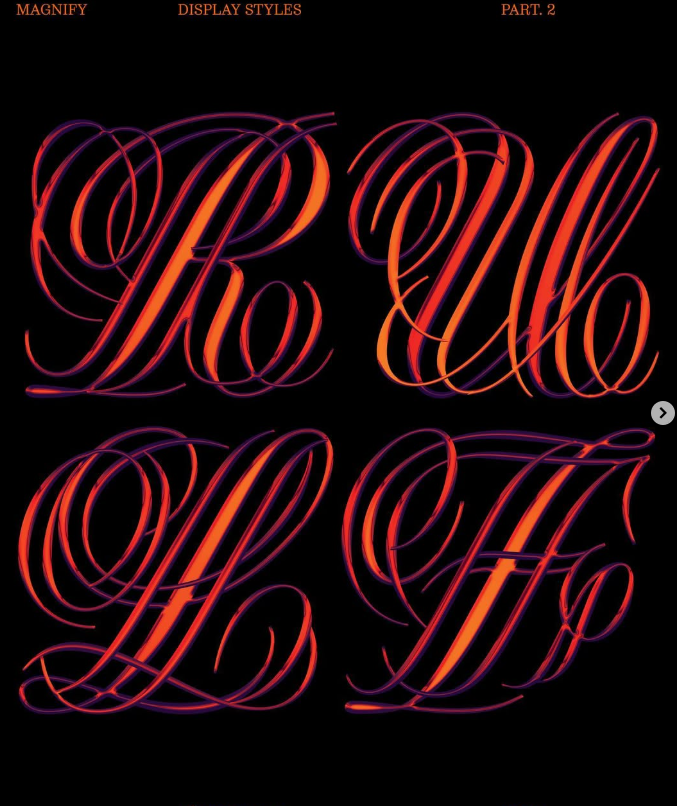 2
-
Responding to John, I think ATypI made the right decision.
A serious international professional organization needs to be able to bring together people who disagree.
Where exactly is the line? Should Americans who voted for Trump be excluded from international conferences? What about people who supported the Obama administration despite its drone warfare program and the civilian deaths it caused?
I'd rather see ATypI remain an international forum for type design and typography than become an organization where participation depends on passing an ever-changing political litmus test.
I was involved in the font industry during peak woke 1.0, and what drives me crazy is that the people who are loudest about political issues completely outside the scope of the font industry are often complicit in some of the worst injustices within the industry itself—problems they actually have the power to do something about.
Peter Thiel said something recently that resonated with me:
“If you're evil, you're at least competent. And therefore, maybe you're actually kind of good because you're at least getting something done.”
Evil is of course subjective, to many many people things that the western liberal elites of the font industry find perfectly normal could be considered evil. The global nature of global scripts I think demands that people with differing viewpoints work together and cooperate.I'd like professional conferences to be places where people can come together and actually do the work, and politics outside the scope of the task at hand is often used by people who can't do the work as a weapon against the people who can, and often as a weapon against people trying to break into the industry and actually make things better for users and consumers of type and type technology.
Maybe ParaType is evil and bad, I don't know the details. But I do know that there is a huge wave of AI disruption about to hit the font industry, and mob justice and cancel culture are often more about gatekeeping an industry than the surface issues, where is the line between this and excluding an AI startup because they post on X and think Elon is kind of a good guy actually?0 -
This is not a matter of ‘people who disagree’, or of an ‘ever-changing political litmus test’. This is about ATypI providing institutional international legitimacy to a company that actively supports a war of aggression and occupation being waged by Russia against Ukraine, involving numerous well-documented war crimes against Ukrainian civilians, including torture, rape, murder, and kidnapping of children.There are complex political situations in the world. This isn’t one of them. This is as simple as it gets.As to the Thiel quote: there is nothing inherently virtuous in ‘getting something done’, especially not if what you are doing is evil or is excusing or admiring of evil.14
-
The Theil quote is from a longer discussion, and I think the full point is very relevant to the kind of dysfunction I am warning against. The point is that in industries and cultures where this kind of mob justice takes hold, often the people that rise to power are the best at virtue signaling and playing political games, and competent people who get things done are pushed out for not saying the right shibboleths.“If you're evil, you're at least competent, and if you're evil, you're not bad. And therefore, maybe you're actually kind of kind of good because you're at least getting something done... I think it's better to be good than evil. I want to be very clear... but we have all these good versus evil debates and we're just we're full of badness, and so you're in a world where 99% of the businesses, companies, people, political leaders, business leaders are totally incompetent.”1
-
ATypI was asked not to provide a platform to ParaType by Ukrainian designers whose home cities are subject to missile and drone strikes by a political regime that is both evil and incompetent. This was supported by over 300 international colleagues, many of them members or former members of the association, including former board members. This isn’t mob justiceor virtue signalling or shibboleth spouting: it is a specific request from people with a legitimate interest — these are the people whom ATypI has claimed in various ways for many years to represent —, who don’t think the association should be providing cover for a company that supports war crimes.One of the board members with whom I corresponded made what I consider an inaccurate parallel with US tech companies that sell products to the Israeli government, which for obvious reasons some people also think should be boycotted. The more accurate parallel, given ParaType’s CEO’s public celebration of the annexation of Ukrainian territory by Russia, is with companies that actively support illegal settlements and attendant violence in the West Bank, something that even governments that otherwise support Israel have found the moral backbone to sanction.8
-
Can you point me to an actual example of something ParaType did wrong? Not a second hand account of something that was said? The Obama administration was accused of war crimes by human rights organizations and legal scholars, primarily regarding its targeted drone strike programs and military support in foreign conflicts, and most of the US font industry still enthusiastically supports that administration.
I am open to changing my mind about this!
ParaType fonts are on Google Fonts and I think Adobe and Monotype MyFonts also: https://fonts.google.com/specimen/PT+Serif
Should we boycott Google, Adobe, and Monotype?
1 -
All Russian companies materially support, through taxes, the regime that murders its own citizens as well as Ukrainians, but that action singled out ParaType as going beyond and actively siding with the actions of the regime.I don’t feel like spending more time to change your mind, Eli. Your mind doesn’t feel like the thing that needs to change in this situation. As I have stated several times since 2022, I hate having to engage in this stuff, and I hate having to call out a company that was founded by friends. I find it distressing.[For the record, I don’t enthusiastically support any political administration, but I also don’t consider them morally equivalent.]9
-
“Peter Thiel said something recently that resonated with me:”
wtf are you smoking…
7 -
But I do know that there is a huge wave of AI disruption about to hit the font industry, and mob justice and cancel culture are often more about gatekeeping an industry than the surface issues, where is the line between this and excluding an AI startup because they post on X and think Elon is kind of a good guy actually?
I don’t think an AI startup is going to get canceled because they post on X, I think the former already has them covered.
Also thinking Elon is “kind of a good guy” is just as fucking dumb as quoting Peter Thiel but unfortunately here we are having this discussion.
7 -
Okay, but … that’s worse. You do see how that’s worse, right?Eli Heuer said:The Theil quote is from a longer discussion, and I think the full point is very relevant to the kind of dysfunction I am warning against. The point is that in industries and cultures where this kind of mob justice takes hold, often the people that rise to power are the best at virtue signaling and playing political games, and competent people who get things done are pushed out for not saying the right shibboleths.“If you're evil, you're at least competent, and if you're evil, you're not bad. And therefore, maybe you're actually kind of kind of good because you're at least getting something done... I think it's better to be good than evil. I want to be very clear... but we have all these good versus evil debates and we're just we're full of badness, and so you're in a world where 99% of the businesses, companies, people, political leaders, business leaders are totally incompetent.”8 -
A lot of people already do. Organizations are free to do what they will—they also have to suffer the consequences. If you're trying to promote a dialogue within a relatively small community and over 300 people/organizations choose not to participate due to your actions are you really promoting a dialogue?Eli Heuer said:Should we boycott Google, Adobe, and Monotype?6 -
Good morning from France, Europe.
I was disturbed by the management of this situation by the ATypI, an association of which I was a board member for a long time, then vice-president and president. I don't know all the current members of the board well, but in my time, every decision required a consensus and a vote for the most important ones. It isn’t an easy job to be on the board.
We need to have that in mind. ATypI, once non-American, now follows American policy, different from that of the EU, which, for example, due to sanctions against Russia prohibits the trade in software (fonts are software), with Russia. In the long term, ATypI should move away from the US, which was a bad decision at the economic level as well as for legal matters.
It is clear that since February 2022, Ukrainians have been undergoing an invasion and deserve our support. The solidity of the Ukrainian people is exemplary. Ukraine protects our Europe, even if we are regularly "attacked" by Russia.
Judging the Russian citizen by their public statements is difficult. Speaking out in a dictatorship is risky, but it does not mean that all Russians are against the war in Ukraine. Should all companies publicly support Putin's regime?
The topic is the management of call for entries by ATypI board.
I quote this excerpt published in 2025 on the site to announce a new mandate, a classic message that wants to be open to all:“to make ATypI more globally connected and more relevant to emerging voices, both at conferences and beyond. This means growing our presence in underrepresented regions, engaging younger generations, supporting education and research, and building stronger bridges across scripts and cultures—while being honest about what isn’t working. And it also means more than statements of intent.”ATypI proposed in 2025 a call for contributions for two conferences in 2026, requiring an account with an American technology giant, no matter which one, but this is not a good message for a non-profit that wants to be independent. We can observe that no specific speaker admission rules are available. The ATypI board can therefore accept applications from Russia and Ukraine, as well many others countries.
Can an American association invite Russian speakers? A quick search says:“Yes, there are sanctions against Russia due to the Ukraine war, which may affect how U.S. companies engage with Russian speakers. Companies should carefully review current sanctions to ensure compliance, as many dealings with Russian entities are prohibited.Prohibited Dealings: Many transactions with Russian entities are prohibited under current U.S. sanctions. Companies must ensure compliance to avoid legal repercussions.”We do not know if the ATypI has ensured that legally the association did not take any risk, neither for its members nor for the speakers and attendees of the ATypI 2026 Sharjah conference?
On the other hand, we can observe that the ATypI seems to have ignored the calls of Ukrainian speakers, and would also have banned these people from interactions on certain platforms with ATypI accounts.
The Ukrainian speakers, in protest, were right to decide to cancel their participation. They have no other choice, their relatives suffer Russian bombs every day.
In conclusion
Without more insight, we can conclude ATypI board has so far managed this situation very badly. And continues to mishandle what is happening, but it could change by the conference in Sharjah. This impacts all those who have links with ATypI, past, present. This also impacts the association in the long term. The board must react, be transparent and explain itself, and why not apologise?
And above all, propose a mode of operation that will make this kind of thing not happen again.
9 -
Since there seems to be a movement afoot to make ATypI All Things To All People, does ATypI have an official opinion on Israel or Palestine? Are Jews allowed at ATypI conferences? What direction should ATypI require us to face when praying?The world would have so fewer problems if those Font People would simply chant the correct slogans.1
-
It was much better when ATypeI was strictly a group of typography professionals and not tied to either corporate conglomerates or political overlords from anywhere in the World. Type people are human beings as well and should respect the lives of all of our fellow human beings, including those being bombed into oblivion in Ukraine. Humanity should count for something.2
-
Today, a Polish colleague on typo.social asked about the topic of Alexandra Korolkova’s presentation in Sharjah, wondering whether ‘we trust a people siding with colonising agenda to make decisions on how the type looks in layout? ... Does it correctly represent type setting in other languages than Russian? Is it opinionated?’ This prompted me to think about the history of script, language, and typography that I had researched for my essay on ‘Cyrillic beyond Russia’ for The Bloomsbury Handbook of Global Typography, and to think about ParaType in the context of that history. I am reposting my reply here, slightly edited:One of the things my research convinced me of is that all script and language policy emanating from the centre is inextricable from imperialism. Or, put another way: empire’s gonna empire, it’s just what it does.There’s a brief period in the 1920s when the Bolsheviks experiment with encouraging local autonomy within the boundaries of their inherited empire. This is the time of the flowering of ‘Ukrainization’, and support for the development of Latin script orthographies for the Turkic republics. There are a couple of reasons why this happens. One is that at least some Bolsheviks are genuine anti-imperialists, the other is that the centre is weakened by war and civil war, so has to play nice.Then, in the 1930s, the centre reasserts itself. Everything has to become more Russian. The Latin alphabets of Turkic and other minority languages in the Caucasus are suppressed and replaced by Cyrillic alphabets. Ukrainian spelling is forcibly changed to be closer to Russian, and all geographical and new technical terms have to be Russian-based. The compilers of the Ukrainian dictionary that had been commissioned under Ukrainization are arrested, along with other writers and journalists, many of whom are killed or allowed to die in prison.This history is not just a history of force and internment, though, it is also a history of government meetings, academic symposia, official policy papers, and educational targets. There’s a paper trail of the whole thing, in which the policy changes are explained — why pan-Turkism and Ukrainization go from being encouraged to being suppressed —, and alongside the language of ‘counter-revolutionary nationalist tendencies’ from the government apparatchiks there is the work of the institutes: the linguists and ethnographers, the educators and their literacy campaigns, and, yes, the type designers, typographers, and typesetters of the Academy of Sciences.And a lot of that work has positive aspects. Literacy rates are massively improved for dozens of languages. Minority languages are, by and large, preserved. But those positive aspects are inextricable from the resurgent imperialism of the centre.I visited ParaType when I was in Moscow in 2014. I was there to judge a Cyrillic type design competition, which they were organising, as well as to speak at the Serebro Nabora conference independently organised by Gayaneh Bagdarasyan.Around the same time, Russia annexed Crimea, and ramped up its destabilization of eastern Ukraine. The centre was reasserting itself again.ParaType’s headquarters in Cheryomushki district, Moscow, are located in a building that was part of the Soviet Academy of Sciences, the network of institutes across the USSR that traced their origins to Peter the Great’s Academy in St Petersburg. I don’t know what the current ownership status of that building is: but I suspect like many Moscow buildings its use is in continuity.
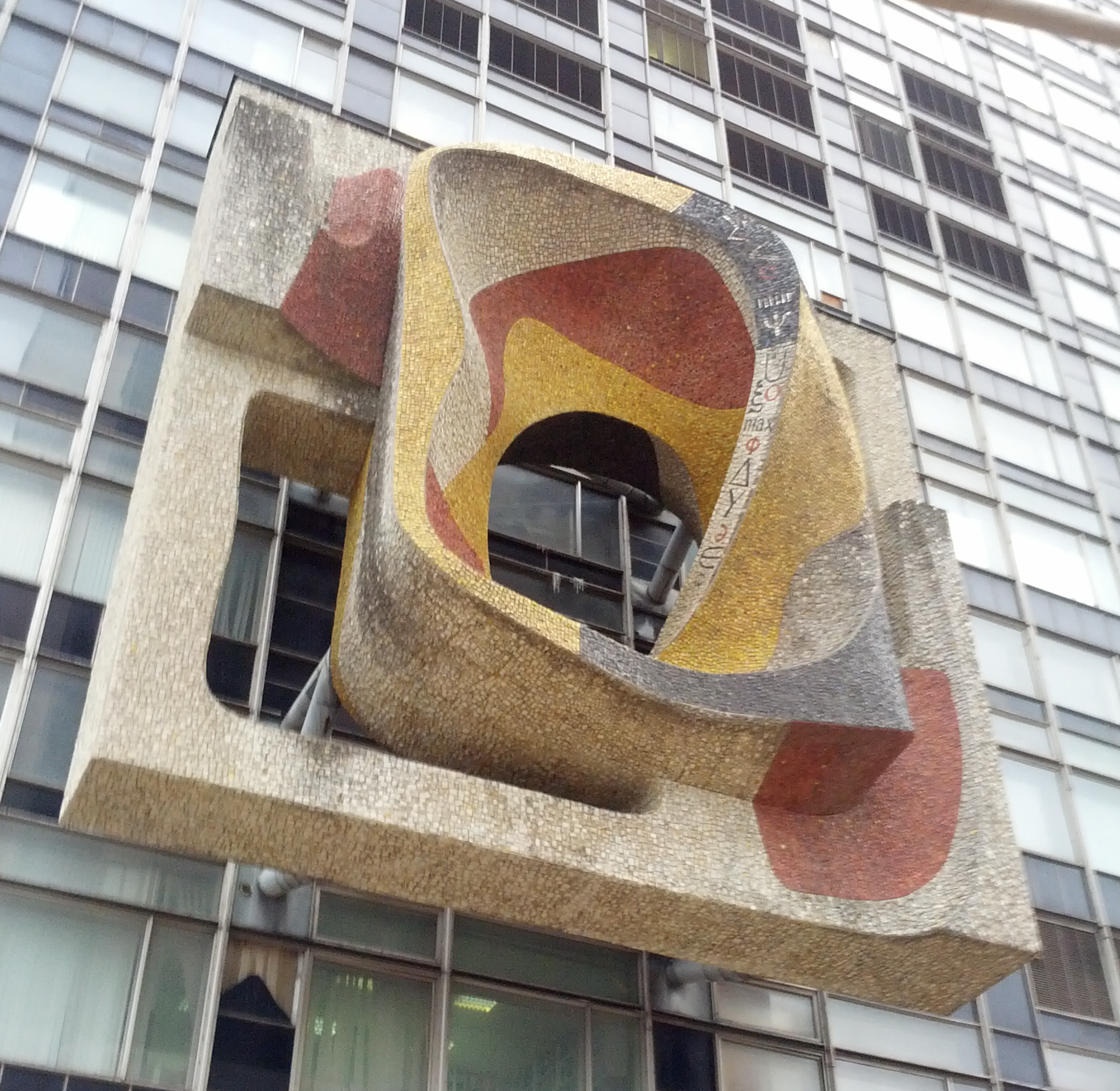
This huge abstract sculpture of an ear is on the exterior of the 1960s building in Moscow where ParaType’s offices are. Note the stream of Cyrillic letters descending into the ear. The sculpture represents the building’s association with linguistics as part of the Academy of Sciences.If you consider the origins of ParaType in the immediate post-Soviet period, it is neither surprising nor sinister to see continuity with the typographic profession of the Soviet period. The same people are involved because they’re the people who know about typography and type design. Like people in all manner of professions at the time, they transition from state enterprise to private sector, during incredibly difficult economic and social times. And a lot of this transition happens in place, i.e. the state enterprises become the private sector. At one end of the spectrum, you get privatisation of massive resource and energy concerns and the rise of the oligarchs, at the other end, you get people just trying to earn a living.I was, and remain, impressed by what Vladimir Yefimov and Emil Yakupov and their colleagues built during this period, and especially with the enthusiasm with which they looked outwards from a difficult situation. When they first attended ATypI in Western Europe in the 1990s, Vladimir and Emil slept in their car because they could not afford a hotel.They used the connections of another alumnus of Soviet typography, Maxim Zhukov, who had spent the latter years of the USSR in New York as typographic coordinator at the United Nations, to reach out to type foundries in the West and legitimately license designs to be extended to the Cyrillic script. They established good ethical practices, rather than just pirating fonts like many other companies.There was a problem in the background, though. Not just for ParaType but for a lot of other post-Soviet private sector enterprises that developed in place, literally in the very buildings and offices they had occupied as state enterprises: what happens when the state re-emerges and reasserts itself?Famously, Putin told the oligarchs they were free to get richer from the enterprises they had grabbed in the 1990s, so long as they stayed out of politics and put those enterprises at the service of the state when requested. Similar pressures and obligations apply elsewhere on the private sector spectrum, and there is an expectation that any Russian business operates at the will of the state.For a company like ParaType, which came out of the Soviet state academic and institutional tradition that helped implement script and language policy across the empire as it was then, I think this inevitably means collusion in what the empire is doing now as the centre reasserts itself.Since I am not sitting in an air raid shelter under Russian drones and missiles, I can even allow myself a measure of sympathy for the people whom I met at ParaType in 2014. I am not living under a repressive murder regime that imprisons and kills its political opponents and punishes anyone who openly defies it. I am not operating my business at the will of the state, and can freely choose for whom I do work or not.That sympathy does not extend to betraying solidarity with my Ukrainian colleagues and friends.So, to the interesting question about the possible content of Alexandra’s talk at ATypI, and its presentation of typesetting in languages other than Russian: I think there is a good chance that the presentation will be accurate, precisely because the alphabets in question and their typography are products of the same institutional tradition as the company itself. ParaType’s provision of fonts for the languages of the empire and border regions does the same thing for Putin’s state that the St Petersburg Academy of Sciences did for Peter the Great in the 18th Century, and the Soviet Academy did for the Bolsheviks. It is inextricable.22 -
Thank you very much, John and Jean François!
I think that it is not enough to just not go to this year’s (second) ATypI conference, which is now already underway, and we have still not heard anything from the board. We really need either a different board, or as large a boycott of future ATypI events as possible.
I have attended 11 ATypI conferences between 2004 and 2016, as well as a non-conference event in early 2020. I spoke at seven of those events and I had been hoping to attend another conference soon, if one would be in western or central Europe and not scheduled during the (admittedly weird) German academic seasons. However, I can’t imagine attending any further ATypI events unless something drastic happens, like full transparency about how this inexplicably bad decision and the even-worse public silence afterwards actually unfolded.
I can’t determine anyone else’s decisions but I sincerely hope that, wherever the next conference is, all regular past attendees will choose to not propose talks, not sponsor the event, and not attend themselves. Is it really going to come to past that, in 2027, everyone gets excited by the call for papers and pretends that this travesty never happened? I very much hope that this is not what comes to pass.4 -
Many thanks to @John Hudson for his very interesting contextualisation, which goes beyond the issue of ATypI’s attitude regarding the management of speakers and its external communication. John, like myself, has been a member of the ATypI board, and each of us, a few years apart, organised an annual ATypI conference in our respective countries. This is to say that the future of the ATypI is important for us, even if in my case, following the transformation of the early 2000s, which we were several to drive, I put myself aside to let the association develop and open up to new generations.
Without going into the details as John Hudson so masterfully did, explaining how typography is an ingredient of imperialism. Like John, I can also bear witness to my contact with Maxim Zhukov, who was an important ambassador for the recognition of Cyrillic in our Western countries. The ITC Cyrillic projects are to his credit. The situation is even more complex as Alexandra Korolkova – who succeeded in renewing Cyrillic by bringing it a dimension influenced by handwriting – is a recipient of the Charles Peignot Prize (2013), as I was (1998), along with nine other excellent designers, an award presented by ATypI.
Dan Reynolds very rightly says, himself bearing witness to his interest in ATypI, we are here to encourage ATypI to hold its head high; there is still time, but please not after ATypI 2026 Sharjah. https://atypi.org/conferences-events/atypi-2026-sharjah/
2 -
hi. my personal opinion (which is wider than one screenshot) is only mine. i’m open to discussion, but please, don’t involve my colleagues1
-
Hello, Anna. I am also open to discussion, at some time and in some place, but since this whole thread is about objection to providing a representative of a Russian company with a platform while the Russian military is occupying Ukraine and murdering Ukrainians, I don’t think it is appropriate to have that discussion at this time or on this platform.[In response to your request not to involve your colleagues: since I am not familiar with the opinions of other directors, managers or employees at ParaType with regard to the invasion of Ukraine, annexation of Ukrainian territory, or any aspect of the history of Russian imperialism in Ukraine, I do not intend to make any assumptions about their individual opinions, or to involve them in responding to your statements. It is a different matter to discuss the position and business of ParaType as a Russian company, paying taxes to the Russian state, and doing work for branches of that state, independent of the opinions of its personnel. I won’t involve your colleagues, but ParaType as a company is involved.]5






Categories
- All Categories
- 47 Introductions
- 4K Typeface Design
- 502 Type Design Critiques
- 594 Type Design Software
- 1.1K Type Design Technique & Theory
- 675 Type Business
- 910 Font Technology
- 29 Punchcutting
- 544 Typography
- 129 Type Education
- 333 Type History
- 82 Type Resources
- 114 Lettering and Calligraphy
- 33 Lettering Critiques
- 81 Lettering Technique & Theory
- 584 Announcements
- 101 Events
- 117 Job Postings
- 179 Type Releases
- 186 Miscellaneous News
- 270 About TypeDrawers
- 54 TypeDrawers Announcements
- 114 Suggestions and Bug Reports