Corporate rip-off of my design

Jasper de Waard
Posts: 664
Hi everyone,
While in the UK recently, I came across a retailer with 100+ stores at prime locations that uses a poorly edited version of my Proza Display as their logo. A quick search showed that they also use it in some other contexts, but I'm not sure how extensively.
This is obviously a violation of my EULA, and in contrast to this hopeless case, I believe I am likely owed some money here. To be clear: this involves a different modification of my design (using a different weight of Proza Display).
I am unsure how to proceed. I have not contacted the retailer yet, as I am unsure what to tell them. Any advice would be greatly appreciated.
In particular, I'd like to know:
- Recommendations for more legally-oriented people to consult with
- How I can potentially estimate the damages this has cost me
- Whether it is a terrible idea to offer them my design services (for a good price + part of the damages) as a kind of settlement.
I'm not dragging their name through the mud here until I've spoken to them, in case anyone is wondering.
Thank you in advance!
Jasper
While in the UK recently, I came across a retailer with 100+ stores at prime locations that uses a poorly edited version of my Proza Display as their logo. A quick search showed that they also use it in some other contexts, but I'm not sure how extensively.
This is obviously a violation of my EULA, and in contrast to this hopeless case, I believe I am likely owed some money here. To be clear: this involves a different modification of my design (using a different weight of Proza Display).
I am unsure how to proceed. I have not contacted the retailer yet, as I am unsure what to tell them. Any advice would be greatly appreciated.
In particular, I'd like to know:
- Recommendations for more legally-oriented people to consult with
- How I can potentially estimate the damages this has cost me
- Whether it is a terrible idea to offer them my design services (for a good price + part of the damages) as a kind of settlement.
I'm not dragging their name through the mud here until I've spoken to them, in case anyone is wondering.
Thank you in advance!
Jasper
1
Comments
-
Asenda Law is a UK firm with experience enforcing font EULAs. Two of their lawyers recently participated in an I Love Typography seminar on the subject, and they understand type and the font business. I would contact them and ask if they are able to provide some initial advice to help you understand what kind of settlement might be possible.8
-
I'm not sure my story will help here, or is even relevant, but one of my fonts, created back in the early 2000s, has been widely distributed on pirate sites. And I realize there's nothing I can do about it. Of course, many people believe (perhaps not entirely sincerely) that the font is truly free and that they can use it in their designs royalty-free. But in these cases, I can do something about it—large companies have absolutely no interest in pirating anything. So when I see my font on yet another vodka label or candy wrapper, I write to the manufacturer, the manufacturer forwards me to a design agency, I name a price, they pay me, and everyone is happy.8
-
Thank you @John Hudson, I'll get in touch with them.
@Dsche Yes that sounds sensible. In this case however I don't know whether they pirated my fonts (I would not be surprised), but they have clearly adapted the design for their own use without my consent which is the bigger problem.0 -
Hi @Dsche Your story is helpful in general to read and what you've done to resolve (when possible).
Just curious, in those "label or wrapper" cases, how do you recognize when it violated a term, versus the design source having acquired an appropriate license to begin with... is it because the font was appearing as manipulated, or perhaps estimating it may be crossing a limit on product/print-run usage amounts?1 -
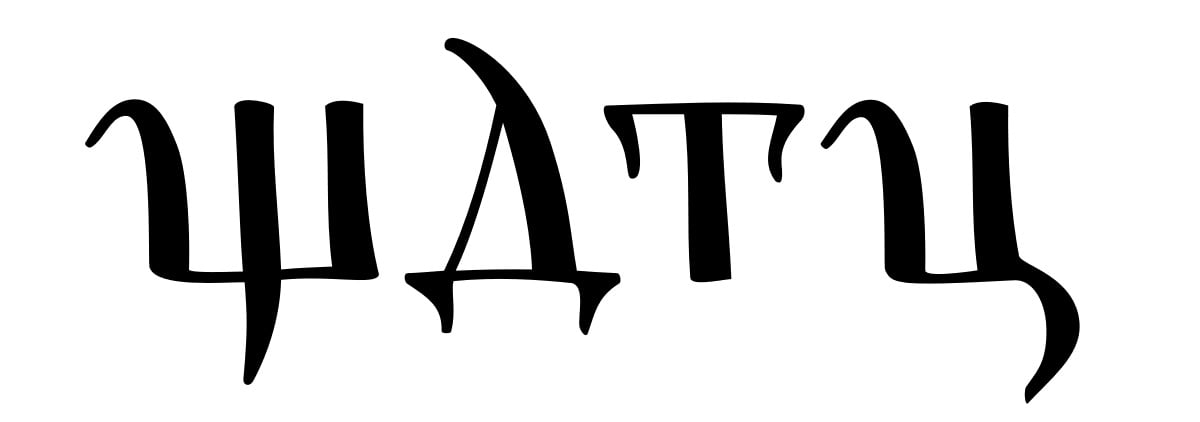
Adam Ladd said:how do you recognize when it violated a termIn my case, it's very simple: fonts don't make me money (except when they're part of a larger design project), so I rarely make them, sell them even more rarely, and usually remember who/when/why bought something from me.In the case described, there was an obvious (to me) violation: I don't know who they are, I've never dealt with clients from Belarus, and I've never given anyone permission to modify my fonts. (They changed, and unprofessionally in my opinion, the tail of the letter щ from its historical form to a bashfully modern one, without regard for rhymes with other characters.)

 But if I were to answer the question more generally, I'm inclined to the following view: the font's author has little or no way to track actual usage, count print runs, or learn about commercials on regional television. Calculating every little detail in a license feeds the lawyers (I'm not saying anything; there are some excellent lawyers), but it doesn't help. That's why some small studios are reducing the license to the bare minimum: "pay for the font, don't modify the font, don't share the font."2
 -
Jasper, is it possible that this is related to Proza Libre in some way?0
-
@Dave Crossland you mean they confused the Proza Display license with the Proza Libre license? I suppose it's possible, but it doesn't make much sense to me from the point of the logo designer. They must have purchased a Proza Display license, and appearance-wise Proza Libre and Display are two very different beasts.0
-
Yeah I think people are not paying attention and just hear "Proza is free" and go to town.... lol
0




Categories
- All Categories
- 47 Introductions
- 4K Typeface Design
- 501 Type Design Critiques
- 592 Type Design Software
- 1.1K Type Design Technique & Theory
- 675 Type Business
- 908 Font Technology
- 29 Punchcutting
- 544 Typography
- 129 Type Education
- 333 Type History
- 82 Type Resources
- 114 Lettering and Calligraphy
- 33 Lettering Critiques
- 81 Lettering Technique & Theory
- 580 Announcements
- 101 Events
- 116 Job Postings
- 176 Type Releases
- 186 Miscellaneous News
- 270 About TypeDrawers
- 54 TypeDrawers Announcements
- 114 Suggestions and Bug Reports