The Script Style of House Numbers


Comments
-
Don’t have time to watch the video right now, so apologies if I’m repeating things you already know. But here’s a 2018 tweet by Tobias Frere-Jones, showing such numerals in a c.1929 catalog by H W Knight & Son. In 2006, H&FJ made Bayside, a digital font based on that model, as part of the Numbers series.1
-
Although the video probably isn't worth watching in full, because it fails to fully resolve the mystery, it does note that the H. W. Knight and Son catalog isn't the origin of the style of numbers. Instead, instances of house numbers in this style go as far back as 1904. And, apparently, the reputed association with Chinoiserie is also spurious. So, while the video doesn't answer where those numbers came from, it does debunk false notions that have been echoed frequently.Here is the relevant page from the earliest example he found, a 1904 catalog by S. W. Reese & Co.:
 3
3 -
BTW, Internet Archive hosts the Knight catalog that Tobias referenced, and the Reese catalog John mentions above.1
-
As the YouTuber, Dime Store Adventures, mentions (although fails to credit the Internet Archive), similar numbers are found in many other catalogs, including George Seere & Sons in 1929 catalog. Another from the earliest year mentioned above: Smith & Holtum, 1904. And here’s the earliest mentioned in the video: Yale & Towne, 1894.
3 -
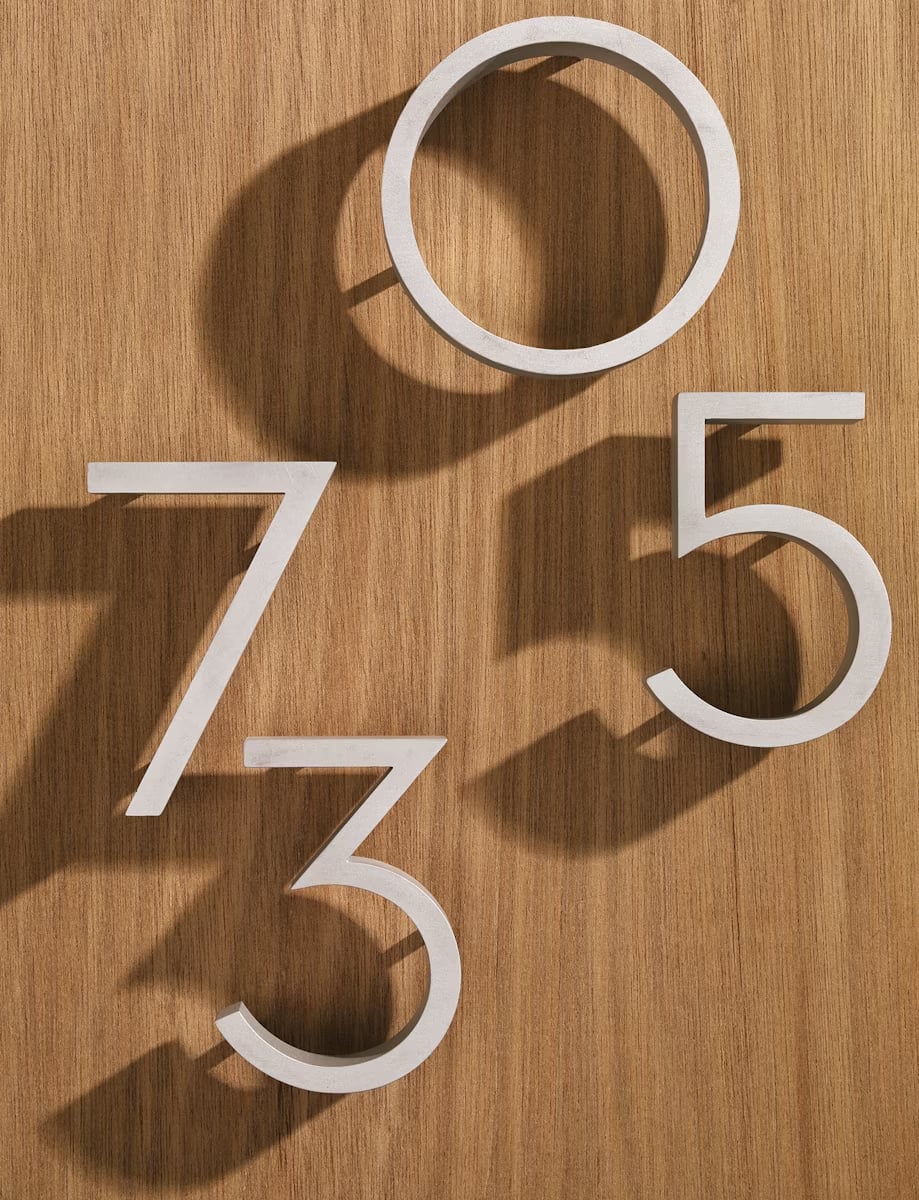
The “penmanship”style house numbers are one of the oddest visual clichés of the American landscape. It’s astonishing that they became as ubiquitous and standardized as the size of toilet paper rolls. But if you live in a Modernist house, as I did for ten years, you feel obliged to buy a set of three-dimensional, metal Neutra numbers, which have now become a cliché of their own.
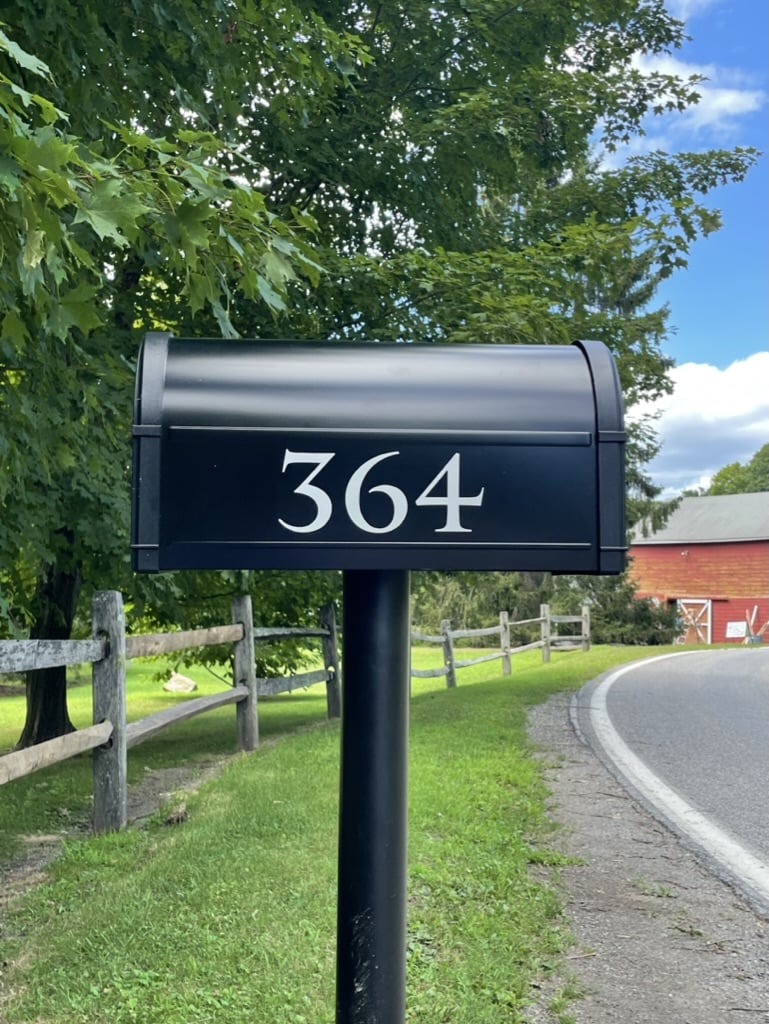
If you live in the countryside, as I do now, or in the more spacious suburbs, the numbers are most often placed on a mailbox, which is often the only thing close enough from the road to be seen. There, one often sees invariably ugly metal, adhesive backed numbers. But for those with an interest in typography, you can upload a PDF of anything you want and get back a vinyl decal in a variety of colors and reflective coatings. I set mine in a font that has figures of generous width and utterly unambiguous forms.
 0
0 -
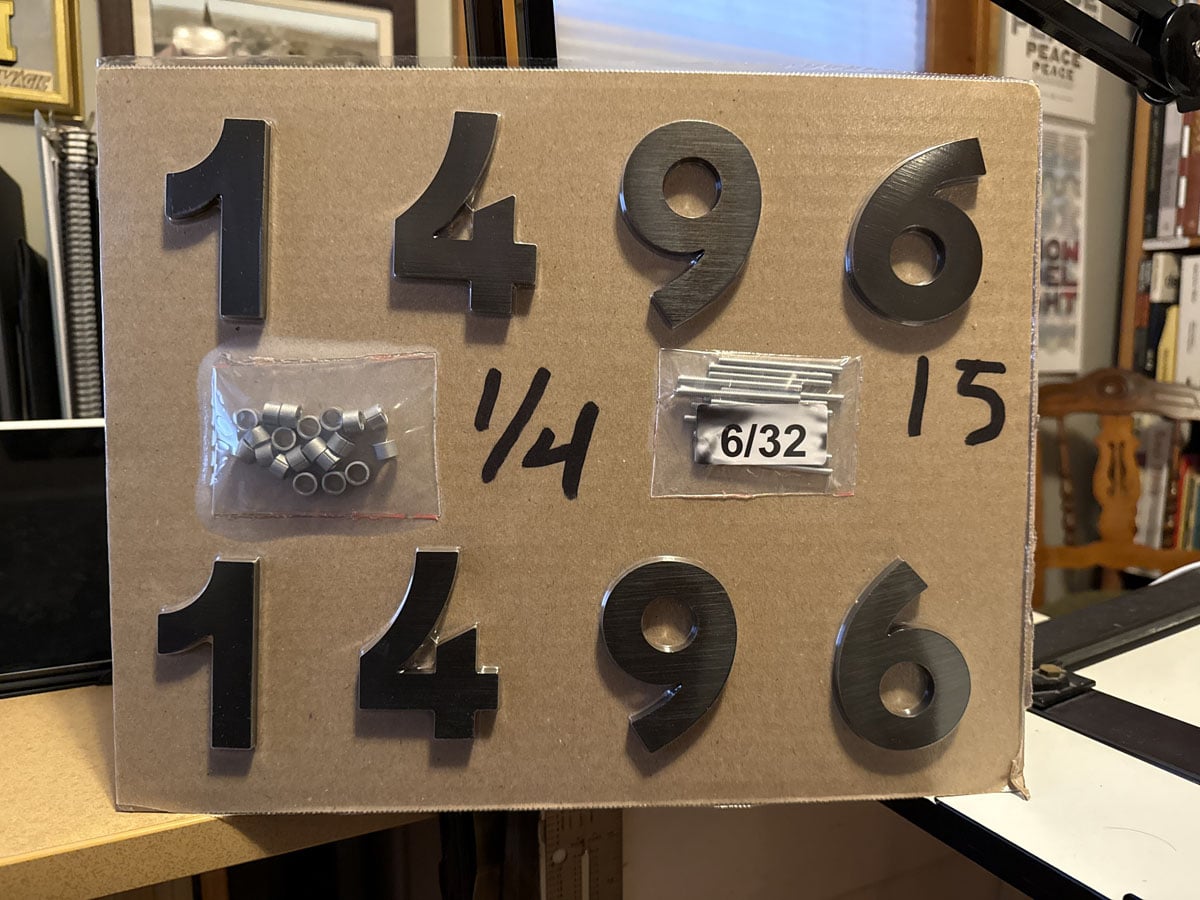
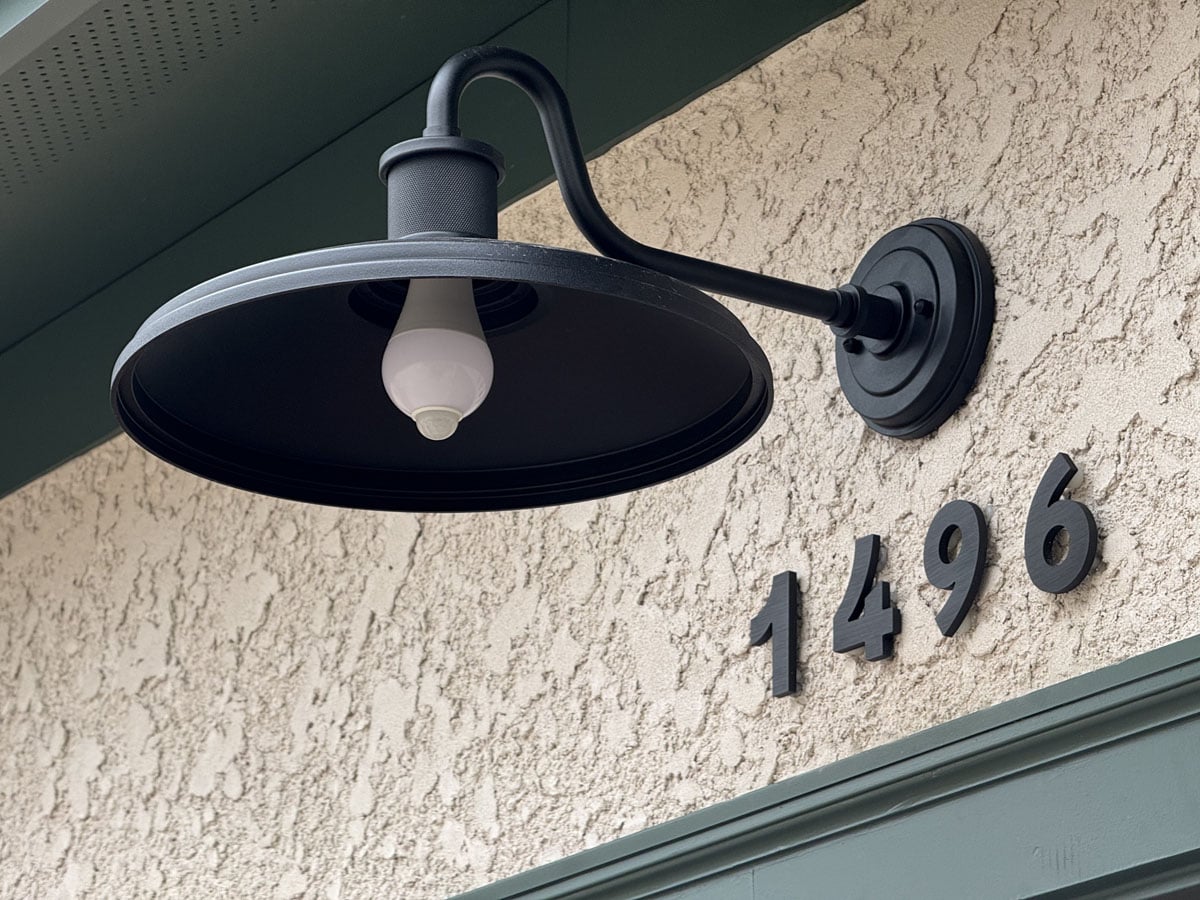
At the risk of veering off topic... It’s possible to have custom metal house numbers made from vector artwork at https://www.customhousenumbers.com/. I had some made last year for our house (see below) using one of my fonts (Coquette). They are not cheap, but the quality is very good, and it comes with all the parts you need for installation and a precise template that matches the spacing and positioning in your artwork. From what I was told, these are the same people who made the Neutra house numbers for House Industries twenty years ago, and they still sell them.
7 -
Thanks for the info, Mark! A friend had asked me about that—now I know.0
-
Can't even think of a type designer living in a house they didn't design the numbers of
 - Here's mine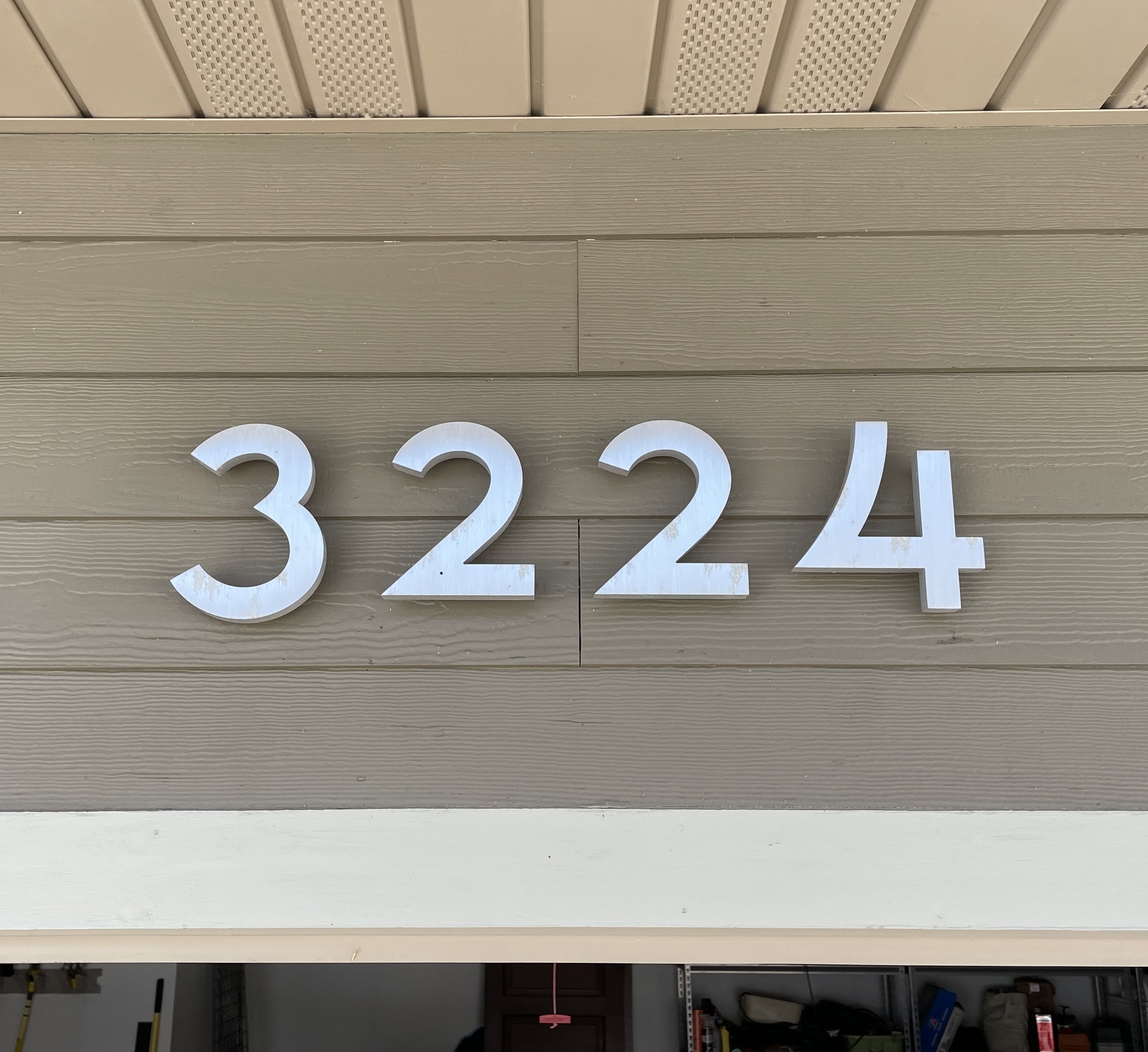
1 -
I didn’t design my house numbers, but worked with John Downer who hand-painted them for me. The shapes are based on his Iowan Oldstyle, but with proportions and stroke weights adjusted to read well from the road.2
-
Florian Hardwig said:In 2006, H&FJ made Bayside, a digital font based on that model, as part of the Numbers series.Incidentally, when searching to find a typeface with this style of numerals, MyFonts presented me with Trailer Park Numerals by Coniglio Type. Unlike Bayside, however, it is only stylistically reminiscent of this style of number without being a match.Also, a comment on the video mentioned Inoxida. I checked it out; it's by Sudtipos, and there is a resemblance in the style of the numbers.0
-
Some DIY that I found delightful: a fraction made from another "1". Royal Street, New Orleans.
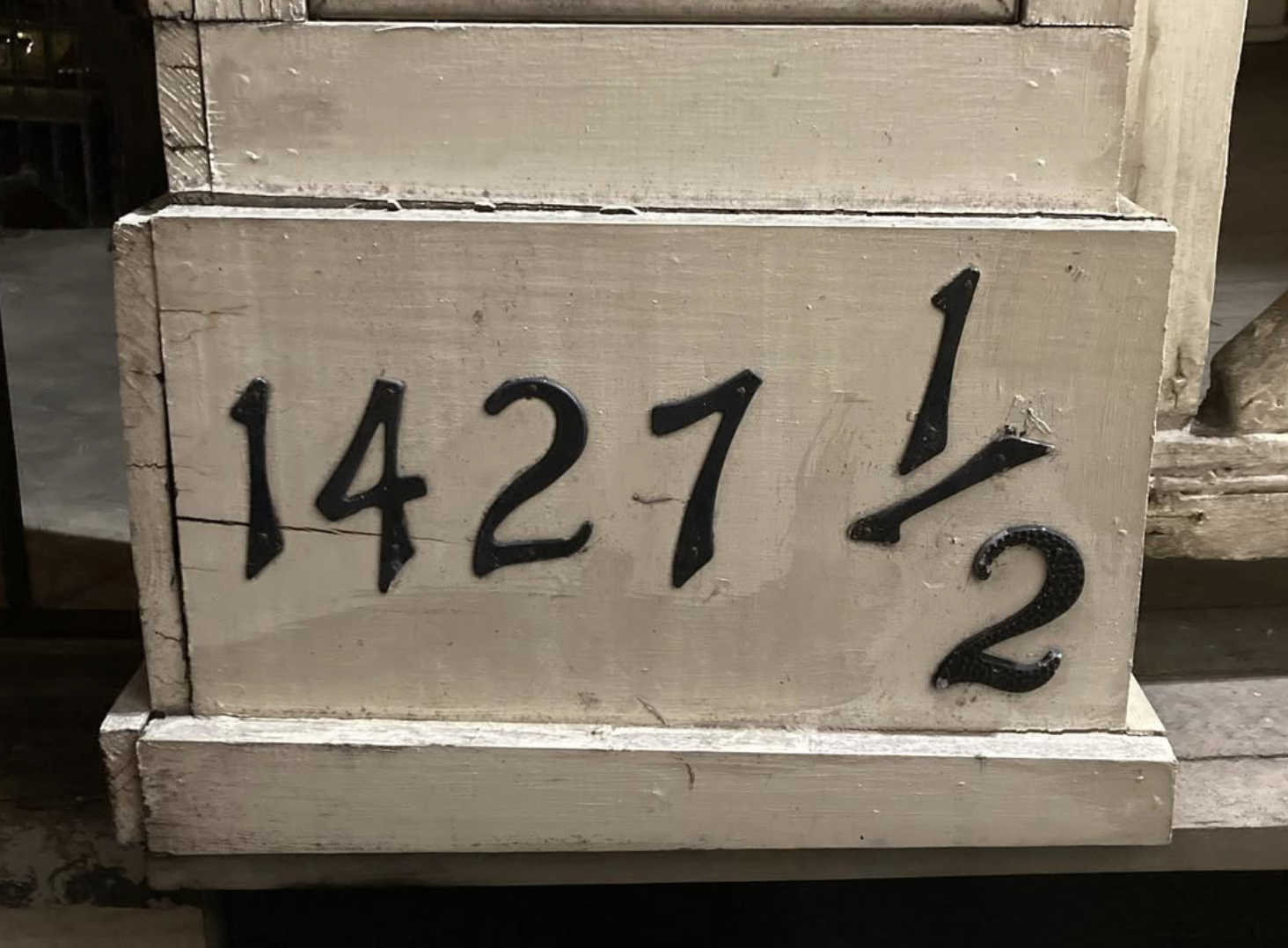 7
7 -
Sorry, no photo — today I spotted something similar on a building comprising various apartments and commercial suites. It was labeled something like “419–437”, with the dash represented by a figure 1 rotated 90° clockwise.Matthijs Herzberg said:Some DIY that I found delightful: a fraction made from another "1".0




Categories
- All Categories
- 47 Introductions
- 4K Typeface Design
- 497 Type Design Critiques
- 590 Type Design Software
- 1.1K Type Design Technique & Theory
- 674 Type Business
- 904 Font Technology
- 29 Punchcutting
- 543 Typography
- 128 Type Education
- 333 Type History
- 82 Type Resources
- 114 Lettering and Calligraphy
- 33 Lettering Critiques
- 81 Lettering Technique & Theory
- 577 Announcements
- 101 Events
- 116 Job Postings
- 174 Type Releases
- 185 Miscellaneous News
- 270 About TypeDrawers
- 54 TypeDrawers Announcements
- 114 Suggestions and Bug Reports