What is the South American "satillo" in shape and use?

Chris Lozos
Posts: 1,474
I am adding the South American glyphs to a sans font and have never designed a satillo and am looking for advice from a native speaker.
1
Answers
-
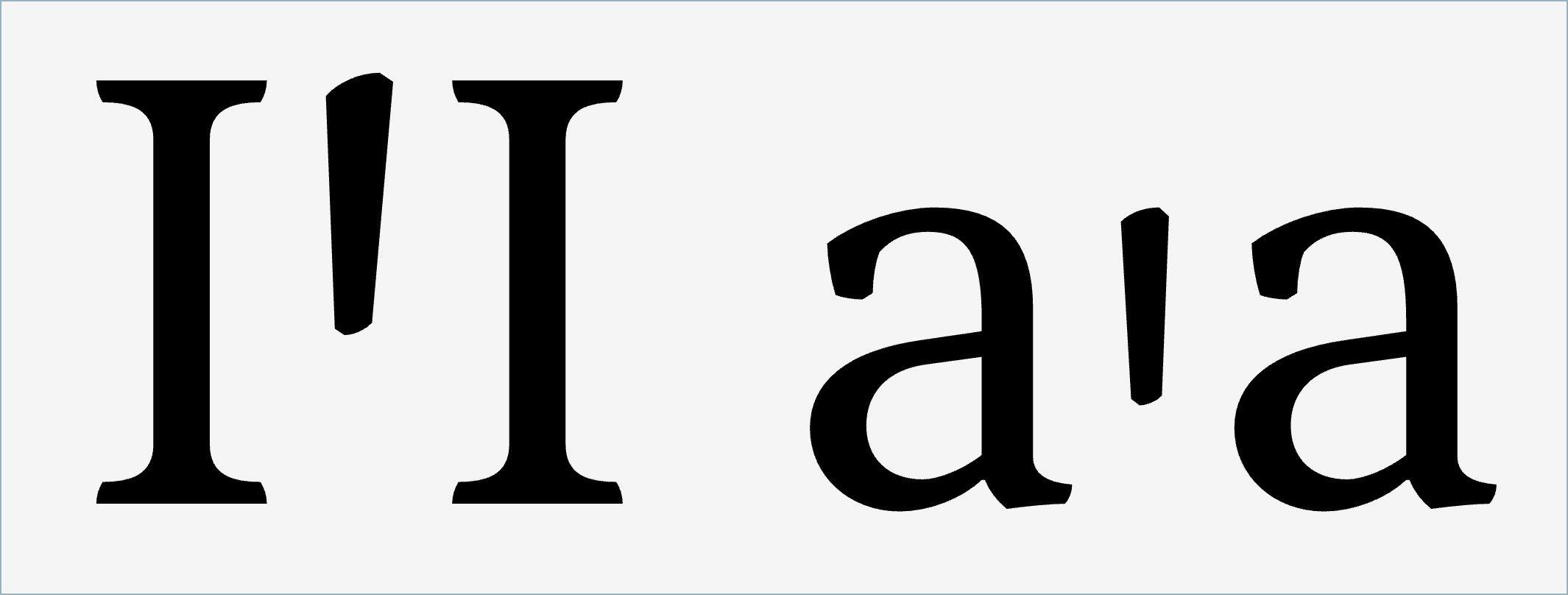
Not a native speaker here. Its name is "saltillo" (small jump) and it's used in Nahuan languages (mostly central Mexico) and also in Rapa Nui (Easter Island, only uppercase). My approach:
 0
0 -
At last year’s Face/Interface conference, Mexican designer Manuel López Rocha spoke about designing for indigenous South American language communities. He touched on the importance of the saltillo. I don’t find the talk recorded online. But you can view an example of his work at https://cuatroojos.com.mx/lin-diseno-de-tipografia where you can at least find good examples to infer from.4
-
For a bit of background info, see Proposal to Encode Additional Orthographic and Modifier Characters.0
-
Igor’s uppercase form look pretty good to me, but I don’t recall ever seeing the saltillo aligned to the x-height like that.
Here are the Brill forms, including smallcap:
5 -
Thank you all, this helps! It appears to me then that the mark's shape follows the top part of the exclamation but is shorter? Does anyone have a link to some text with it in use that I can test with? Any glyphs it is commonly used between?0
-
@John Hudson Thank you very much, my lowercase position is wrong.
@Chris Lozos In the proposal to add saltillo to Unicode, there are two sample texts (pages 5-6).1 -
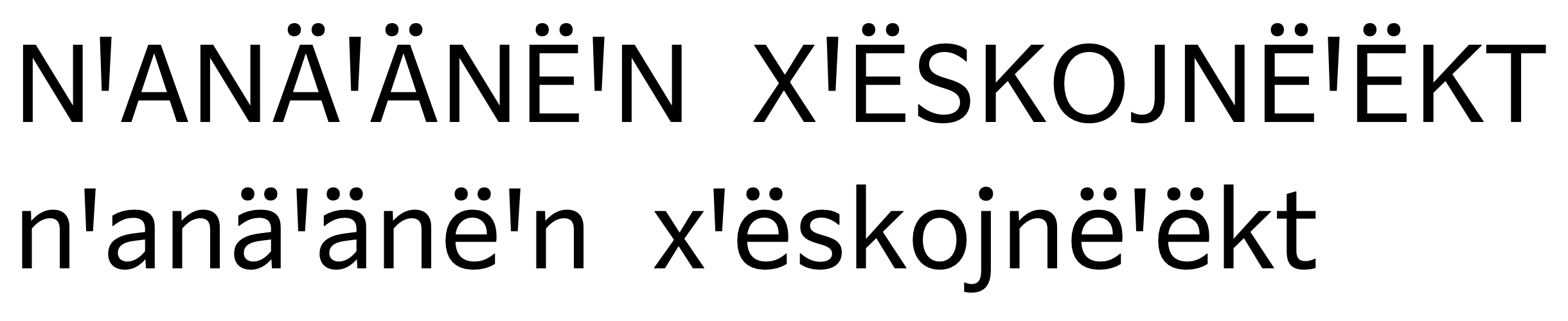
Also, on Miguel’s site that I linked there are some examples of real text. But you’ll have to transcribe them, as they are in images.Be sure to test between paired vowels-with-dieresis — e.g., nꞌanäꞌänëꞌn or xꞌëskojnëꞌëkt.
 4
4 -
That helps greatly, Kent!1
-
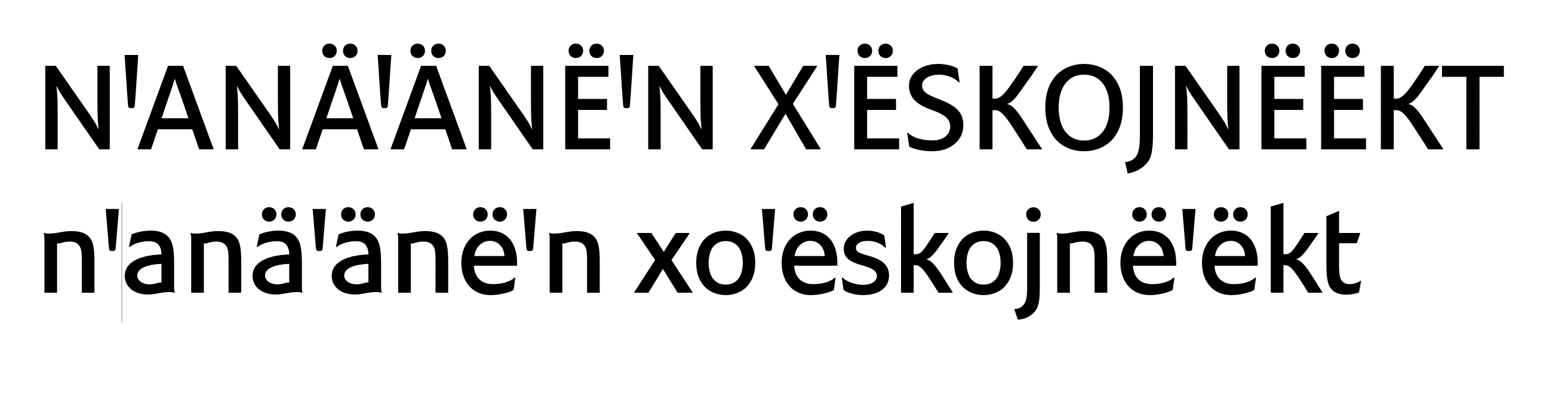
Here is what I did with it so far:
 0
0 -
I think it makes sense for the cap version to align with the tops of the other capital letters.1
-
I was just going by this, John:
 0
0 -
I was just going by this comment, John.

0 -
Hmm. I think I missed that aspect of the encoding proposal back when designing Brill.
The raised form looks less good, I think, when the all-caps have been properly letterspaced. I can sort of see the legibility benefit when the caps are tightly spaced, though.1 -
To me, it is a feel thing. I am a drummer so it is like hitting the bass drum every other beat but with a thump. Maybe I need to play Salsa music while I design type. Is not the glottal utterance an accent? The more raised form of the Saltillo makes it an accent, to me.0
-
Is not the glottal utterance an accent?No, its just another consonant sound. Some writing systems have a letter for it.
1 -
Is not the glottal utterance an accent?
It's the sound you can "hear" in the English "uh-oh", or in German before every word (and morpheme) that starts with a vowel. It's the slight crack/interruption between the two vowel segments. It's called a glottal stop. While it is not pertinent in English to understand a word, in many languages, this sound is important to distinguish different words.
1 -
Not entirely true. Though generally not considered phonemic* in English (except perhaps in such edge‐case oddities as the uh‐oh you cited and the ʼm‑ʼmm that means “no”**), the glottal stop ([ʔ]) occurs frequently in English‐language speech and must be reckoned with (even if but subconsciously) for proficient comprehension. As in German, itʼs often found at the beginning of words that phonemically begin with a vowel — it can serve as part of the contrast between a nice man and an [ʔ]iceman — and it can even be inserted mid‐word, helping distinguish append from up[ʔ]end. Furthermore, the glottal stop often replaces the phoneme /t/ after a vowel — details, like dialects, vary; but this phenomenon is often heard in words such as hit and spot (but perhaps not if you try to enunciate them to produce an example!).* A phoneme is an abstract conception of a speech sound, present in the mindʼs underlying representation of a word or phrase or morpheme. A phoneme might in effect be essentially identical to its actual phonetic realization, or phonological processes might transform it into a slightly different sound, a more dissimilar sound, a sequence of sounds, or even no sound at all; phonological processes might also move sounds around or insert additional ones. The distinct speech sounds we produce and hear, irrespective of phonemic value, are phones. To compare with computer font technology: A phoneme is much like a Unicode code point, whereas a phone is much like a glyph. (See, I managed to bring this back around to type!)** Contrast ʼm‑ʼmm for “no” with ʼm‑hmm for “yes”.4 -
Thanks for the extra detail! I didn't want to get too technical with the linguistic terminology. I was indeed referring to phonemic contrast.
The minimal pair examples from English are interesting, thanks! t-glottalisation is of course a great example of the glottal stop in English, even though I assume it's still mostly an allophone in that case, though I admit I'm not very knowledgeable (nor, necessarily interested) in English phonology.1 -
More examples of these characters are in the SIL Latin fonts https://software.sil.org/lcgfonts/download/ I am not saying that how SIL drew the characters is the only way to do it, rather, we in SIL are delighted that other fonts are including these characters.2
-
@bdavos Thankyou for your help!0
-
I'm hardly an expert on this subject, but isn't the Satillo (U+A78B and U+A78C) used only in Mesoamerica (Southern Mexico and neighboring Central American countries)? Is this thread confusing or conflating it with the similar-looking but functionally different Pusa modifier (U+02BC) used in South America (specifically Paraguay and surrounding areas)?0
-
The thread title is misleading. The discussion is indeed about the saltillo (note spelling), so properly Mesoamerican, not South American.1
-
I acknowledge my pathetic spelling/typing unforgivable error and prostrate myself across a bed of sharpened stones in the hopes of gaining forgiveness for this egregious error ;-)0
-
I should think pieces of type would be required.Chris Lozos said:sharpened stones1 -
But only sharp ones! No zeroes for Chris!
 1
1 -
@Thomas Phinney As Monty Python used to say, "Poke him in the eye with a pointed stick" ;-)0


Categories
- All Categories
- 46 Introductions
- 3.9K Typeface Design
- 489 Type Design Critiques
- 572 Type Design Software
- 1.1K Type Design Technique & Theory
- 658 Type Business
- 870 Font Technology
- 29 Punchcutting
- 528 Typography
- 121 Type Education
- 327 Type History
- 80 Type Resources
- 111 Lettering and Calligraphy
- 32 Lettering Critiques
- 79 Lettering Technique & Theory
- 560 Announcements
- 95 Events
- 116 Job Postings
- 169 Type Releases
- 179 Miscellaneous News
- 269 About TypeDrawers
- 53 TypeDrawers Announcements
- 114 Suggestions and Bug Reports